Meal planning sits at the center of most nutrition practices. Whether you work with athletes chasing performance targets, clients managing chronic conditions, or individuals simply trying to eat better, the ability to translate clinical knowledge into a practical, personalised weekly plan is what separates nutrition consulting from general health advice.
But here is the reality: creating those plans manually takes a long time. Industry surveys consistently put manual meal plan creation at 30 to 60 minutes per client. For practitioners seeing 20 clients a week, that is 10 to 20 hours spent building plans instead of growing a practice.
This guide walks through how meal planning actually works for nutrition professionals in 2026. It covers the step-by-step workflow, compares the tools available (including the rise of AI-assisted planning), addresses European-specific considerations most guides ignore, and explains how to price meal planning as a service.
What Does Professional Meal Planning Involve?
A professional meal plan is not the same as a recipe collection or a diet PDF downloaded from the internet. For nutritionists, it is a clinical tool that bridges assessment and outcome.
At its core, professional meal planning involves four stages:
- Client Assessment: Understanding health history, dietary restrictions, allergies, intolerances, cultural preferences, lifestyle constraints, and goals.
- Nutritional Calculation: Determining appropriate calorie targets, macronutrient distribution, and micronutrient considerations based on assessment data.
- Plan Construction: Building a structured yet flexible eating plan that fits the client’s life, cooking ability, budget, and taste preferences.
- Delivery and Follow-Up: Providing the plan in a usable format, monitoring adherence, gathering feedback, and adjusting over time.
What separates a professional plan from a generic template is personalisation at each stage. The plan a sports nutritionist builds for a competitive cyclist looks nothing like the plan a clinical dietitian builds for someone managing type 2 diabetes. Both require clinical judgment, but the workflow steps are structurally similar.
Professional meal plans in 30 seconds, not 30 minutes.
Create your account today. Your first professional meal plan is 30 seconds away.
The Step-by-Step Process: From First Consultation to Delivered Plan
Here is the practical workflow most successful nutritionists follow, whether building plans manually or with software support.
Step 1: Initial Client Assessment
The foundation of any meal plan is a thorough intake process. This typically includes:
- Health history: Medical conditions, medications, supplements, recent bloodwork
- Dietary information: Current eating patterns, food preferences, cultural or religious restrictions, ethical considerations (vegetarian, vegan, halal, kosher)
- Allergies and intolerances: Coeliac disease, lactose intolerance, nut allergies, FODMAP sensitivities
- Lifestyle factors: Work schedule, cooking ability, kitchen equipment, family meals, social eating patterns
- Goals: Weight management, muscle gain, performance, clinical management, general health
- Budget and logistics: Weekly food budget, shopping frequency, meal prep time available
For European practitioners, this assessment should also capture regional considerations. A client in Scandinavia has different seasonal produce availability than someone in southern Spain. A client in Germany has different staple ingredients than one in Greece. These details affect what goes into the plan.
Step 2: Calculate Nutritional Targets
Once assessment is complete, the next step is calculating appropriate calorie and macronutrient targets.
Basal Metabolic Rate (BMR): Most practitioners use the Mifflin-St Jeor equation (considered more accurate than Harris-Benedict for modern populations):
- Men: BMR = (10 x weight in kg) + (6.25 x height in cm) – (5 x age) + 5
- Women: BMR = (10 x weight in kg) + (6.25 x height in cm) – (5 x age) – 161
Total Daily Energy Expenditure (TDEE): Multiply BMR by an activity factor:
- Sedentary (desk job, little exercise): BMR x 1.2
- Lightly active (1-3 workouts/week): BMR x 1.375
- Moderately active (3-5 workouts/week): BMR x 1.55
- Very active (6-7 intense workouts/week): BMR x 1.725
- Athlete (twice-daily training or physical job + training): BMR x 1.9
Macronutrient Distribution: From the TDEE, distribute macros based on the client’s goal and clinical needs:
- Protein: 1.2 to 2.2 g/kg body weight (higher for athletes, older adults, and weight management)
- Fat: 20 to 35% of total calories (varies by clinical need)
- Carbohydrates: Remaining calories, distributed based on activity level and tolerance
For clinical populations, additional considerations apply. Clients with chronic kidney disease may need protein restriction. Clients with diabetes need carbohydrate distribution strategies. Clients with cardiovascular conditions may need sodium and saturated fat targets.
Step 3: Build the Meal Plan
This is where clinical knowledge meets practical reality. A well-built meal plan accounts for:
- Meal timing: How many meals and snacks, aligned with the client’s schedule
- Cooking ability: Realistic recipes that match skill level and available time
- Budget: Ingredient costs that fit the client’s financial reality
- Variety: Rotation of foods to prevent monotony while meeting nutritional targets
- Seasonal availability: Using produce that is fresh, affordable, and flavourful in the client’s region
- Cultural appropriateness: Foods and meal patterns that feel natural to the client
For European practitioners, seasonal planning adds another dimension. In summer, Mediterranean clients benefit from fresh tomatoes, courgettes, stone fruits, and leafy greens. In winter, Northern European clients rely more on root vegetables, preserved foods, hearty grains, and citrus. Building these seasonal rhythms into plans improves both nutrition quality and client satisfaction.
Step 4: Deliver the Plan
Delivery format matters more than most practitioners realise. A plan that sits in an email attachment never gets followed. The most effective delivery approaches include:
- Printed or PDF plans: Clean, branded documents the client can stick on the fridge
- Shopping lists: Organised by store section, with quantities already calculated
- Recipe cards: Individual recipes with clear instructions and portion sizes
- App-based delivery: Interactive plans clients can check off as they go
- Client portal access: A centralised space where clients view their plan, track progress, and message their practitioner
Professional branding on deliverables builds credibility. A client receiving a polished, branded meal plan document perceives higher value than one receiving a Word document or spreadsheet printout.
Step 5: Monitor and Adjust
Meal plans are not static. The initial plan is a starting hypothesis. Effective follow-up involves:
- Weekly check-ins during the first month
- Adjusting portions, recipes, or food choices based on client feedback
- Updating targets as the client’s body composition, activity level, or health status changes
- Seasonal adjustments to align with changing produce availability
- Long-term progression from detailed plans to flexible guidelines as the client develops independence
The follow-up phase is where the relationship deepens and where client retention happens. Nutritionists who build structured follow-up into their meal planning service see higher adherence rates and better outcomes.
Three Approaches to Meal Planning: Manual, Software, and AI-Assisted
Nutritionists currently use three broad approaches to building meal plans. Each has distinct trade-offs.
Approach 1: Manual Planning (Spreadsheets and Documents)
How it works: The practitioner builds plans from scratch using spreadsheets, Word documents, or paper templates. Recipes are individually sourced, portions calculated by hand, and shopping lists created separately.
Time investment: 30 to 60 minutes per plan, depending on complexity. For repeat clients, template reuse can reduce this to 15 to 20 minutes after the initial build.
Advantages:
- Complete creative control over every element
- No software cost or learning curve
- Works for any client, regardless of how unusual their needs are
- No dependency on third-party platforms
Disadvantages:
- Time-intensive, especially for new practitioners without established templates
- Prone to calculation errors when working manually
- Difficult to scale beyond a manageable client load
- No automatic shopping list generation
- Hard to track client adherence and outcomes systematically
- Branding and professional presentation require additional design work
Best for: Practitioners with fewer than 10 clients, those who prefer complete control, and practitioners just starting out before investing in tools.
Approach 2: Dedicated Meal Planning Software
How it works: Practitioners use purpose-built meal planning platforms that include food databases, recipe libraries, auto-generated shopping lists, and client delivery features.
Time investment: 5 to 15 minutes per plan once templates are established. Initial setup and learning curve require 2 to 5 hours.
Advantages:
- Significant time savings over manual planning
- Built-in food databases reduce calculation work
- Automatic shopping list generation
- Professional-looking branded deliverables
- Client portal options for direct delivery
- Some platforms offer client tracking and outcome measurement
- Recipe libraries speed up plan construction
Disadvantages:
- Monthly or annual subscription costs (typically EUR 20 to 80+ per month)
- Learning curve for new software
- Food databases may not include regional European ingredients
- Some platforms are US-centric with limited European food coverage
- Dependency on a third-party platform for core practice workflow
- Data privacy considerations under GDPR
Best for: Established practices with 10+ clients, practitioners who value time efficiency, and those wanting professional branded deliverables.
Key European-focused options: NutriAdmin, Nutrium, NutriWell, Nutritio
Professional meal plans in 30 seconds, not 30 minutes.
Create your account today. Your first professional meal plan is 30 seconds away.
Approach 3: AI-Assisted Meal Planning
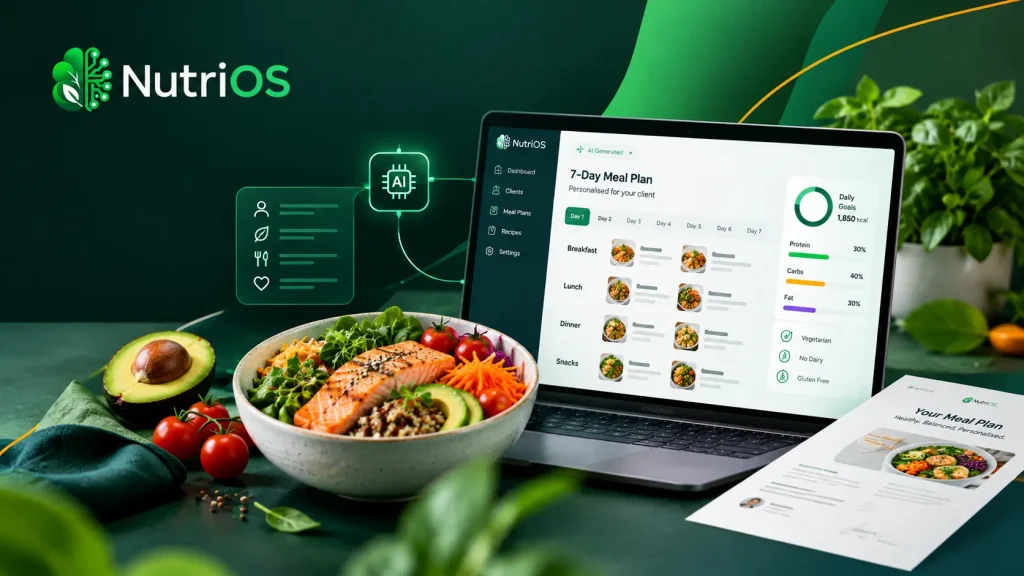
How it works: Practitioners use AI-powered tools that generate draft meal plans based on client parameters. The AI handles the computational work (calorie distribution, macro balancing, recipe selection, shopping list creation), while the practitioner reviews, adjusts, and approves.
Time investment: 1 to 5 minutes for AI generation, plus 5 to 10 minutes for professional review and adjustment. Total: approximately 5 to 15 minutes per plan.
Advantages:
- Fastest approach for initial plan generation
- Reduces cognitive load on repetitive calculation tasks
- Frees practitioner time for higher-value clinical work
- Can handle complex constraints (allergies, macros, seasonal produce) simultaneously
- Scales well for practitioners with growing client loads
Disadvantages:
- Requires careful professional review (AI is not a substitute for clinical judgment)
- Quality depends on the specificity of input parameters
- May generate plans that need cultural or regional adjustment
- Newer technology with less track record than traditional software
- Potential client concerns about “AI-designed” plans
- Requires trust in the platform’s data quality and privacy practices
Best for: Tech-comfortable practitioners, growing practices, sports nutritionists with high client volumes, and those who want to focus clinical time on assessment and follow-up rather than plan construction.
How the Three Approaches Compare
| Factor | Manual | Software | AI-Assisted |
|---|---|---|---|
| Time per plan | 30-60 min | 5-15 min | 5-15 min |
| Learning curve | None | Moderate | Low to moderate |
| Monthly cost | Free | EUR 20-80+ | Varies |
| Scalability | Low | High | High |
| Creative control | Full | High | Moderate (with review) |
| Error risk | Higher | Lower | Lowest (with review) |
| European food coverage | Depends on practitioner | Varies by platform | Varies by platform |
| Professional deliverables | Manual design required | Built-in | Built-in |
| GDPR compliance | Practitioner’s responsibility | Platform-dependent | Platform-dependent |
For most nutritionists in 2026, the answer is not which single approach to use, but how to combine them. Many practitioners use AI or software for initial plan generation and then apply manual adjustment for clinical refinement. The key is matching the approach to the complexity of the case and the value of the practitioner’s time.
European-Specific Considerations Most Guides Ignore
Most meal planning resources are written for the US market. They reference USDA food databases, American dietary guidelines, imperial measurements, and US-specific ingredients. For European nutritionists, this creates practical problems.
Food Databases
European food composition varies significantly from US data. The same “medium apple” may have different calorie content depending on the variety, growing conditions, and source database. European practitioners should use food databases based on European data sources where possible. The European Food Information Resource (EuroFIR) network provides harmonised food composition data across European countries.
When evaluating meal planning software, check whether the food database includes:
- European-specific ingredients (different dairy varieties, bread types, regional staples)
- Metric measurements as default (grams and millilitres, not cups and ounces)
- European food brands and products
- Regional variations within Europe
Seasonal Produce and Regional Variability
Europe spans multiple climate zones. A meal plan built for a client in Lisbon in January looks different from one built for a client in Helsinki in the same month.
Summer (June-August):
- Mediterranean: Tomatoes, courgettes, peppers, aubergines, stone fruits, fresh herbs
- Northern Europe: Berries, new potatoes, leafy greens, peas, broad beans
- Central Europe: Asparagus, cherries, berries, fresh salad greens
Winter (December-February):
- Mediterranean: Citrus, artichokes, fennel, chicory, preserved foods
- Northern Europe: Root vegetables, cabbage, kale, stored apples, preserved berries
- Central Europe: Stored root vegetables, brassicas, dried legumes, hearty grains
Building seasonal awareness into meal plans improves nutritional quality, reduces cost, and supports local food systems. This is an area where nutritionists can differentiate their service from generic online plans.
Professional meal plans in 30 seconds, not 30 minutes.
Create your account today. Your first professional meal plan is 30 seconds away.
European Dietary Guidelines
The European Food Safety Authority (EFSA) provides nutrient reference values that differ from US Dietary Guidelines in several ways:
- Protein recommendations use slightly different terminology (Population Reference Intake vs Recommended Dietary Allowance)
- Fat recommendations distinguish between saturated and trans fats differently
- Micronutrient reference values cover a different set of nutrients
- Alcohol guidelines are more conservative in most European countries
- Fibre recommendations differ in the specific metrics used
For practitioners working with clients across multiple European countries, understanding these differences matters for clinical accuracy.
GDPR and Client Data
Meal plans contain sensitive personal health information. Under GDPR, nutritionists must:
- Have a lawful basis for processing client dietary and health data (typically consent or legitimate interest)
- Store client data securely with appropriate technical measures
- Provide clients with access to their data on request
- Delete client data when it is no longer needed
- Ensure any software platforms used for meal planning are GDPR-compliant
- Document data processing activities if serving more than 250 clients
When choosing meal planning tools, European practitioners should verify GDPR compliance, check where data is stored (EU-based storage is preferable), and review the platform’s data processing agreement.
How to Price Meal Planning as a Service
Many nutritionists undercharge for meal planning because they treat it as an add-on rather than a core service. Here are common pricing models used by European practitioners.
Model 1: Included in Consultation Fee
Some practitioners bundle meal planning into their consultation pricing. A 60-minute consultation at EUR 80 to 150 may include a basic meal plan delivered within 48 hours.
Pros: Simple pricing, clients know what they are paying upfront
Cons: Meal planning time is absorbed, reducing effective hourly rate
Model 2: Separate Meal Planning Service
Meal planning is priced independently of consultations:
- Basic plan (5-day, 2 meals + snack): EUR 30 to 60
- Full plan (7-day, 3 meals + snacks + shopping list): EUR 60 to 120
- Premium plan (7-day, full recipes, shopping list, prep guide, branded PDF): EUR 100 to 200
- Ongoing plan updates (monthly): EUR 40 to 80 per update
Pros: Transparent pricing, clear value proposition, scalable
Cons: Requires marketing the service separately, clients may resist separate charges
Model 3: Subscription Model
Clients pay a recurring fee for ongoing meal planning support:
- Monthly subscription: EUR 50 to 150 per month
- Typically includes one updated plan per week or fortnight
- May include messaging access and periodic check-ins
- Often bundled with other services (exercise programming, supplement guidance)
Pros: Recurring revenue, ongoing client relationship, predictable income
Cons: Requires consistent delivery, client may disengage if not actively using the service
Model 4: Package Pricing
Bundled service packages that include meal planning alongside other offerings:
- Starter package (2 consultations + 2 meal plans): EUR 150 to 250
- Transformation package (12 weeks, weekly plans + monthly consultation): EUR 400 to 800
- Corporate wellness package (group meal planning workshops): EUR 500 to 2,000
Pros: Higher perceived value, larger transaction size, easier to sell a complete solution
Cons: More complex to deliver, requires careful scoping
What European Practitioners Actually Charge
Based on practitioner surveys and platform data:
- New practitioners (0-2 years experience): EUR 30 to 60 per plan
- Established practitioners (3-7 years): EUR 60 to 120 per plan
- Specialist practitioners (clinical, sports, 7+ years): EUR 80 to 200 per plan
- Group practice/clinic rates: EUR 50 to 150 per plan (practitioner sets rates within guidelines)
The key factor is not experience alone, but the perceived value of the deliverable. A polished, branded 7-day plan with shopping lists, recipe cards, and a prep guide commands a higher price than a spreadsheet printout, even if the nutritional content is identical.
Building a Sustainable Meal Planning Practice
Create Reusable Templates
After building your first 20 to 30 plans, patterns emerge. Most clients fall into a manageable number of categories: weight management, sports performance, clinical management, general wellness. Build template structures for each category that can be personalised quickly.
Invest in Your Toolkit
The time saved by good tools pays for itself within a few clients. Whether you choose manual templates, dedicated software, or AI-assisted planning, the right toolkit reduces friction and improves consistency.
For European practitioners, prioritise tools with:
- European food databases
- GDPR compliance
- Metric units as default
- Professional branded output
- Client delivery features
Build Follow-Up Into Every Plan
A meal plan without follow-up is a document that gets ignored. Structure your service to include regular check-ins, plan adjustments, and outcome tracking. This is where client results happen and where retention is built.
Scale Intentionally
As your practice grows, reassess your approach to meal planning. What worked for 5 clients will not work for 30. The practitioners who scale successfully are those who systematise early and invest in efficiency without sacrificing quality.
Final Thoughts
Meal planning is one of the highest-value skills a nutrition professional can develop. It translates clinical knowledge into something clients can actually use. But the method matters as much as the content. A beautifully designed plan that takes three hours to build is not sustainable. A hastily thrown-together plan that takes five minutes does not serve the client.
The sweet spot in 2026 is a workflow that combines professional clinical judgment with efficient tools. Use AI or software to handle the computational heavy lifting. Apply your expertise to personalise, refine, and ensure clinical accuracy. Deliver results in a format that clients find genuinely useful.
For European practitioners specifically, the opportunity is to lean into what makes your practice different. Use seasonal European produce. Work with European food databases. Follow European dietary guidelines. Respect GDPR. These are not limitations. They are competitive advantages that generic online plans cannot match.
Frequently Asked Questions
How long does it take to create a professional meal plan?
Manual meal planning typically takes 30 to 60 minutes per client. With dedicated software, this reduces to 5 to 15 minutes once templates are established. AI-assisted planning can generate a draft in under a minute, though professional review and adjustment should still take 5 to 10 minutes. The total time depends on complexity, the tools used, and the practitioner’s experience.
What should a professional meal plan include?
A complete professional meal plan should include: daily meal breakdown (breakfast, lunch, dinner, and snacks), specific portion sizes, recipe instructions or references, a shopping list organised by category, nutritional summary (calories, macros, key micronutrients), and any clinical notes or substitution options. For European practitioners, plans should use metric measurements and consider seasonal ingredient availability.
How do I handle multiple dietary restrictions in a single plan?
Start with the most restrictive constraint and build outward. For example, if a client is both gluten-free and dairy-free, eliminate gluten-containing and dairy ingredients first, then build the plan from the remaining food options. Use substitution strategies (gluten-free grains, plant-based dairy alternatives) and verify that all micronutrient targets are still met with the restricted food choices.
What is the difference between meal planning software and practice management software?
Meal planning software focuses specifically on building, delivering, and tracking food plans for clients. Practice management software handles broader business operations (scheduling, billing, client records, invoicing). Some platforms combine both functions. For nutritionists who only need meal plan creation, dedicated meal planning software is usually more cost-effective. For larger practices, integrated platforms may be preferable.
How do I transition from manual planning to software without disrupting my clients?
Start by migrating one or two new clients to the new platform while continuing to serve existing clients through your current system. Once comfortable, migrate existing clients gradually. Most platforms allow importing client data and existing plans. Communicate the change to clients as an improvement in service quality (better presentation, shopping lists, easier updates) rather than a change in their care.
Can I use AI-generated meal plans directly with clients?
AI-generated plans should always be reviewed and approved by a qualified practitioner before delivery to clients. AI can handle computational tasks (calorie distribution, macro balancing, recipe selection) effectively, but clinical judgment is needed to verify appropriateness for the individual client’s health status, medications, and specific needs. Always maintain professional oversight.
How do European dietary guidelines differ from US guidelines?
European guidelines (based on EFSA recommendations) differ from US guidelines in several areas: protein uses Population Reference Intake values, fat recommendations have different threshold percentages, micronutrient reference values cover different nutrients, and alcohol guidelines are generally more conservative. European guidelines also emphasise sustainability and environmental considerations more prominently than US guidelines.
What food database should I use for European clients?
Prioritise meal planning tools with European food composition data. The EuroFIR network provides harmonised data across European countries. Some software platforms use national food databases (UK Composition of Foods, French CIQUAL, German BLS) which provide more accurate data for local clients than USDA-based databases.
About NutriOS
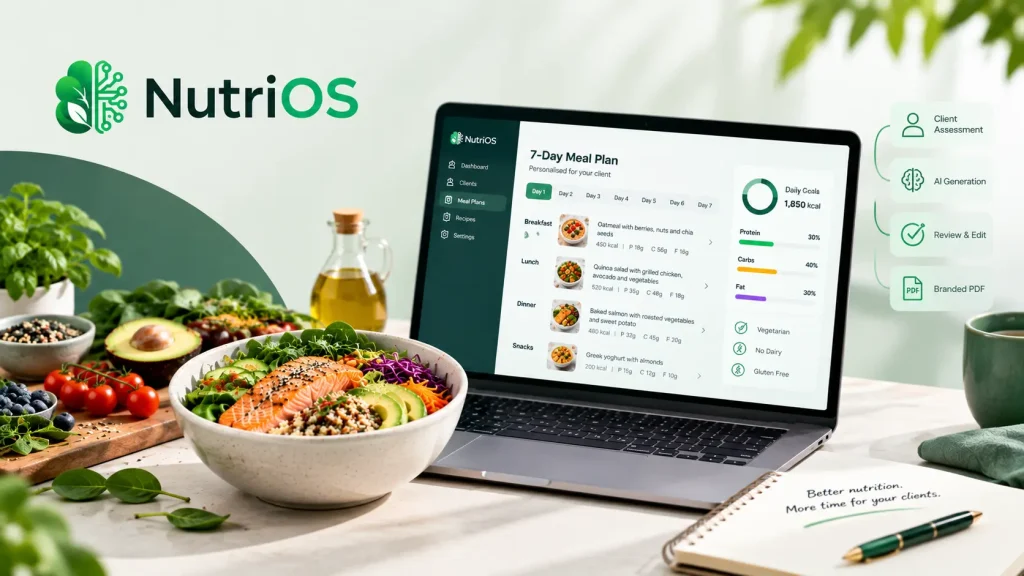
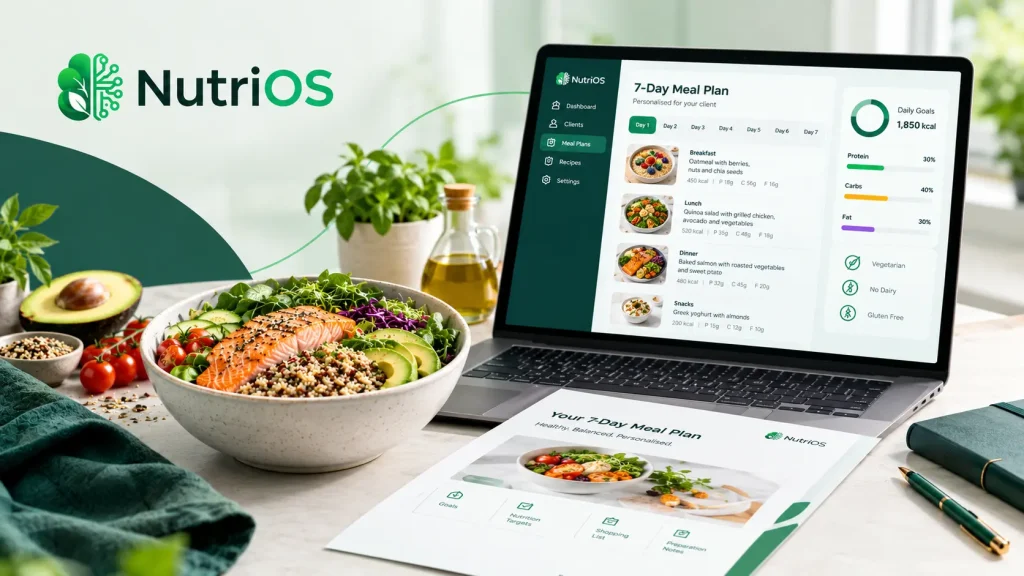
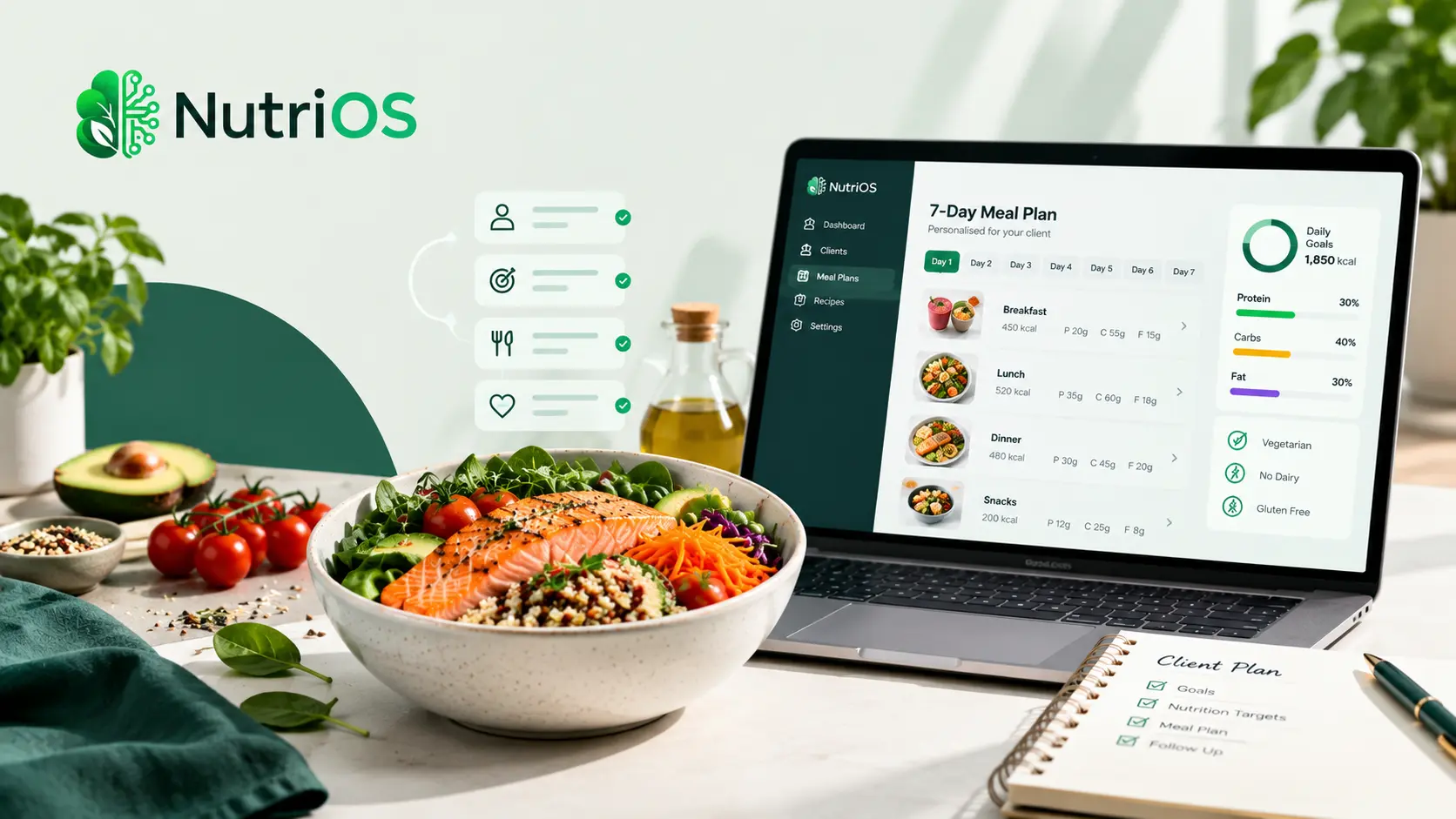
NutriOS is an AI-powered meal planning platform built for nutrition professionals in Europe. It generates personalised, clinical-grade meal plans in 30 seconds, using European seasonal food databases, GDPR-conscious architecture, and professional branded PDF delivery. Nutritionists maintain full clinical oversight with every plan. Learn more at nutrios.eu.